Friday, June 20, 2014

Ten Tips for Showing Goats


If you have purebred goats and are interested in competing or want to see how your goats compare to others of the same breed, you can show them at fairs and other events put on by different goat associations. Showing has the added benefit of helping you market your goats. Here are ten guidelines to remember:

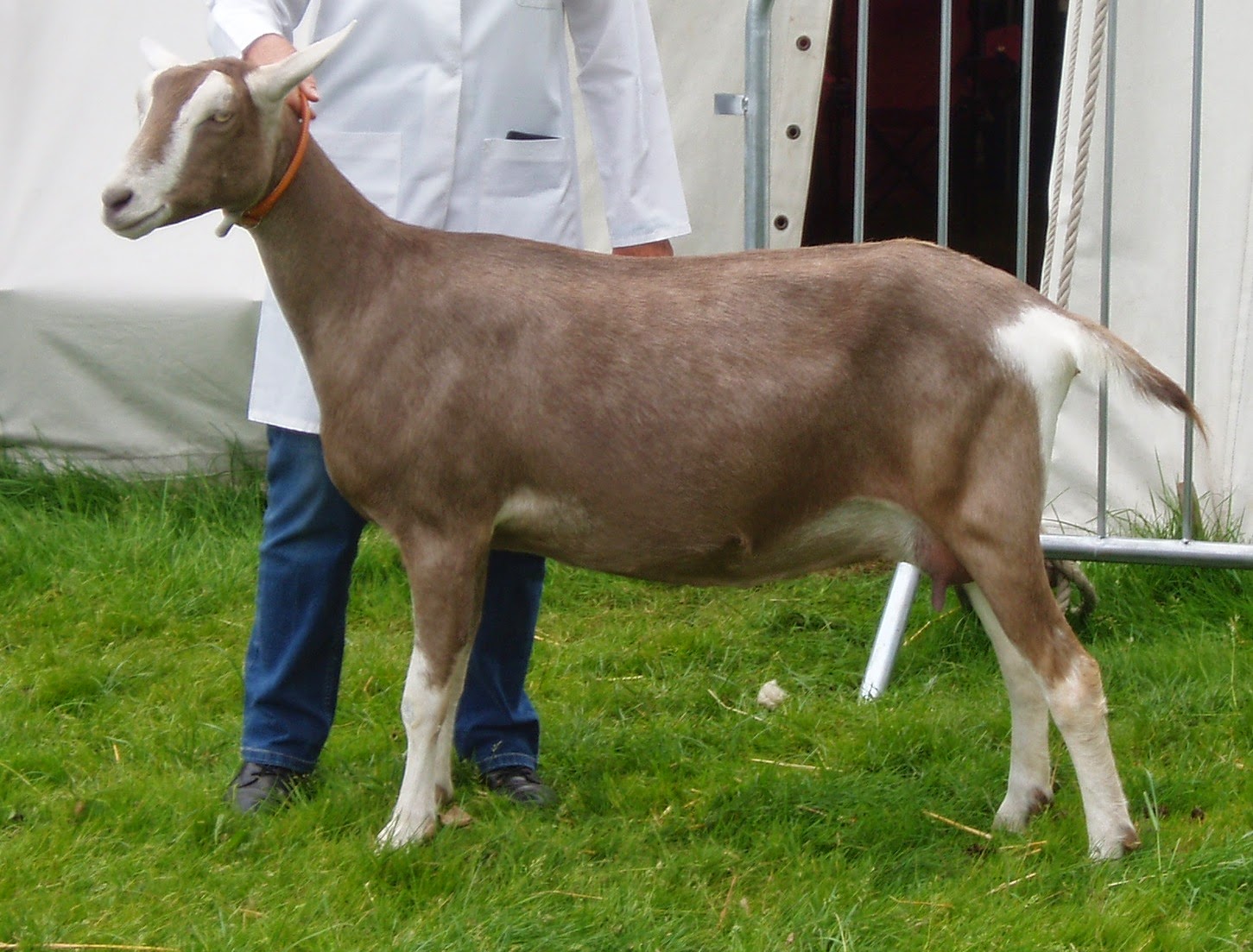
Practice walking with your goat before the show: Even a well-trained goat may be a little nervous during the show because of unfamiliarity with the show ring, but if you lead-train first, at least the goat has an idea of what you expect.

Thoroughly clean and groom your goat before the show: Buy your goat a nice, clean collar. Trim your goat's hooves so that the judge can see that she walks correctly and doesn't have defects of the foot or leg. Bathe and comb and/or clip your goat according to the standard for that type of goat.

Dress appropriately: Most goat shows require you to wear certain clothes when showing your goats. You won't be barred or removed from a show for wearing other clothes, but if you're being judged on showmanship, you'll lose points.

Keep your goat between you and the judge: To change the side of the goat you're walking next to, do a roll turn. If you're walking clockwise with the lead in your right hand, just before you get to the judge, turn around the front of your goat and change to your left hand. You can reach over your goat to set the legs that are on the far side from you. Always set the legs closest to the judge first.

Move to the front of your goat when the judge views the goats from the rear. As the judge moves to the right side and around to the front of the goat, move to the goat's left side, keeping him between you and the judge. When the judge is in front of the goat, remain on the goat's left side.

Keep your eyes on the judge at all times: The judge will tell you what you need to do and may ask questions about your goat. If you're distracted, you might lose track of what's going on.

Don't talk with your neighbor: Talking with the person next to you while the judge is thinking about placements, comparing goats, or examining each goat is considered rude and distracting.

Remain calm even if your goat is misbehaving: Despite being trained, your goat may get bored, scared, or just ornery and misbehave in the show ring. Don't ever hit the goat or treat it roughly.

Do what the judge asks: You will start by walking the goat clockwise around the ring. Keep your goat under control with her head up, and keep her between you and the judge. If your goat doesn't want to move, gently lift the goat's tail. When the judge asks you to stop walking, set your goat up in a straight line, facing the same direction as the other goats. Stand or squat on the goat's other side or near her head. Stay alert for another request and keep the goat set up.

Keep your goat properly set up: Make sure that your goat's weight is evenly distributed. Don't splay the legs. Set up a dairy doe so that you can see a third of the udder in front and a third behind the back leg. Set up the rear legs first and then the front legs. Hold the goat's head up. Make sure his front legs are straight down from shoulders.

Be a good loser (or winner): After judges determine rankings, they explain their reasons for awarding placements as they did. Listen closely to those reasons. Regardless of your placing, congratulate the class winners and other goat owners who placed ahead of you.

Tuesday, June 3, 2014

Using Guardian Animals to Protect Your Goats

Many goat owners keep livestock guardian dogs, donkeys, llamas, or alpacas with goats as full-time guard animals. Guardian animals can add a substantial cost in terms of training and upkeep, but they may be well worth the effort and time if they work out.

Try to get a guardian animal from a breeder who has used the animals for this purpose and can vouch for (but not guarantee) their pedigree, training, and temperament.

Livestock guardian dogs (LGDs) were bred and have been used for thousands of years to protect goats and sheep in Europe and Asia. They live and bond with the goats, are aggressive toward predators, and are focused on the job. These dogs are traditionally white, which enables them to blend in with the sheep flock and be distinguished from predators. Of the many breeds of livestock guardian dogs, the Great Pyrenees is probably the best known. Other common livestock guardian breeds include :

                      Anatolian
Don't buy a herding breed such as Australian shepherd or border collie to guard your goats; they aren't qualified. Their job is to herd, and you may have a problem with them chasing goats. That isn't to say that some haven't been successful, just that they are unlikely to do a good job protecting goats.
Donkeys have been used for hundreds of years to guard sheep and other herd animals. They're very intelligent and have good hearing and eyesight. They work better alone and don't like dogs, so they can't work as a team with an LGD. Donkeys' dislike of dogs also makes them effective against coyotes.

Because donkeys are naturally herd animals, if they're bonded to the goats, they can be counted on to stay with them most of the time. Ideally, you get a guardian donkey at birth or as soon as it's weaned to make sure it bonds with the goats. Because they eat the same food as the goats, donkeys also will want to stay with the herd after they realize that's where the food is.

When a guardian donkey becomes aware of a predator, she situates herself between the intruder and the herd and brays loudly. If the animal doesn't leave, she chases it, and if that doesn't work, she attacks by rearing up on her hind legs and coming down on the predator with her front feet.

Llamas and alpacas are good guardian animals because they bond quickly to goats and also eat the same feed. Castrated males make the best goat guardians. Males can injure goats by trying to mount them and can be too aggressive toward humans as well.

Unlike dogs, llamas work better as guardians when they're alone instead of in a pack. A llama and guard dog combination can be trained to work cooperatively, though.

Llamas need strong fences to help them do the job. If a guardian llama can't scare off a dog or coyote with his aggressive attitude, the predator may kill him.

Tuesday, May 13, 2014

Where to Find Goats to Buy


Finding goats to supplement your green lifestyle or to raise as pets isn't difficult. If you're looking for a rare goat breed or have very specific needs, finding the goats you want locally might be a little harder, but take your time and use some of the resources discussed here:

Local feed stores: Get acquainted with the proprietors of local feed stores. Often, the owners or clerks at the feed stores know the farmers in the area and are willing to direct customers to them. They also usually have a bulletin board with livestock and farm-related ads, business cards, and flyers — a good place to start in your search for goats.

Agriculture papers or thrifties: These publications are a good place to look for goats for sale in your area or a short drive away.

Registries and goat clubs: A breed club promotes the breed they're interested in and sometimes sponsors shows. A registry is usually a nonprofit association that keeps a herdbook on goats. When you join, you get a member handbook or contact information for other members who have the type of goat you want.

Breeders' Web sites: You can find people who breed the type of goat you want by going directly to their Web sites. Just search for the type of goat you want and the word breeder. You'll find a number of Web sites, usually with pictures, pedigree information, and sales pages. Some breeders also include information on their management practices and helpful hints for raising goats.

UNFarms: UNFarms is a good resource for finding goats locally and often at a competitive price. Just go to the site for your city or a close city and look in the farm and animals sale section.

Wednesday, April 16, 2014

Toggenburg Dairy Goat


Toggenburg is popular dairy goat. They were originated from north eastern area of Switzerland. They are very big sized. Dairy goat breeders of India, Malaysia, Philippine, Venezuela, South Africa etc.  are raising Toggenburg goats for the purpose of commercial milk production. 
Milk production is about 3 liters/day and the world record 2613 kg/lactation or 12.5 kg/day. They can produce milk for a long time if not served and are good for upgrading local breeds.So they are among the best dairy goat breeds.


The color of Toggenburg goat’s body brown or chocolate.
They have white spots in their knee and mouth.
Throat is long, light and straight.
Ears are black colored but white near neck.
Both male and female goats don’t have any horns.
A female Toggenburg goat can produce about 3 kg milk daily.
They love to graze in the field.
An adult male goat weights about 60 to 65 kg and female 70 kg.


Friday, March 21, 2014

The Benefits of Raising Goats

You get a lot from keeping #goats. Raising goats can help you achieve a sustainable lifestyle. You can #milk them or eat their #meat, use their #fiber and their skin for making clothing, and even use their dung for fuel (if you are so inclined).
You may want to raise goats for a variety of reasons:

Becoming more self-sufficient: Goats can give you milk to drink and food to eat, and even help you carry your belongings when backpacking.

Cutting your dairy bill: If you raise dairy goats, you might not have to buy cheese or milk ever again. Your goats need to have kids to give you milk, and then you can milk them throughout the year for up to three years without re-breeding.

Raising your own meat: Goat meat has always been popular in the developing world because goats are much more affordable and use fewer resources than animals such as cows. According to the U.S. Department of Agriculture, the demand for goat meat is expected to continue growing.

Growing your own fiber: Some of the finest fiber comes from goats: Angora and Pygora goats produce mohair, cashmere goats produce cashmere, and crosses between the two breeds produce a fiber called cashgora.

If you raise fiber goats, you can spin your own yarn and make hats, blankets, sweaters or other products. You can also sell the fiber to spinners or to companies that make these products.

Harnessing goats' power as living weed whackers: Goats are well-known for their ability to wipe out weeds. In fact, some people have made businesses out of renting out their goat herds to cities and other municipalities to clean up areas that are overgrown with weeds or blackberry bushes. These leased goats decrease the need to use herbicides, improve the soil's fertility, decrease the risk of fire, increase the diversity of plants in the area, and control weeds in hard-to-reach areas, such as steep hills.

Breeding and selling: Unless your goats are just pets or brush eaters, you probably want to breed them. If you have dairy goats, you need to breed them to keep a good supply of milk flowing. And you need to replace any goats you sell or slaughter.

Keeping goats as pets: You can leash train goats and take them on walks throughout the neighborhood or around your property, which provides exercise for all of you.

Using your goat for packing: Goats are social animals and, after you establish a relationship with them, they love to spend time with you. They enjoy going for hikes and can carry your belongings; they find plenty to eat right there in the wilderness.

Raising goats as a 4-H project: Getting children involved in raising goats is a good way to teach responsibility. Keeping goats requires twice-a-day chores. Children quickly learn that the goats depend on them. They also find out about the cycle of birth and death and get outdoors to get regular exercise.

Friday, February 28, 2014

Germany – a strong agricultural country

Germany is an agricultural country: more than 80% of the country's territory is put to agricultural or forestry use. It is also a major exporter in the agricultural and food industries with corresponding exports valued at more than 50 billion euros. The most important commodities include meat and meat products.
When it comes to the production of meat, all those involved work together closely – agriculture, research institutes, training and consulting institutes and those responsible for meat marketing. They ensure that scientific findings and the requirements made by the sales markets are efficiently implemented in breeding, fattening and husbandry. Accordingly, excellent and constantly updated know-how is made available to Germany's farmers.


The production of pork has a long tradition in Germany. Production methods and structures today are on a high standard and undergo constant further development in terms of animal genetics, animal health, production technology and hygiene.

A production quantity of more than 5 million tonnes in 2008 puts Germany top of the list of pork producers in the EU. On a global scale, Germany comes third after China and the USA. Pork husbandry in Germany is primarily concentrated in the North West of the country which accounts for about half of the entire domestic pig population.

Pig breeding in Germany is characterised by the large number of different breeds. Together with the high-performance animals obtained by crossing the German Landrace with the Pietrains, there are also numerous traditional breeds of pigs, such as the Schwäbisch Hall Domestic Pig, the Bentheim Black Pied and the Angeln Saddleback. All breeds stand out with their robust health and excellent quality of meat. While the number of businesses involved in pig farming declines, specialisation continues to increase. Today a good 70,000 pig farms have a total of 27 million pigs. 60% of all pigs are raised in farms with more than 1,000 animals. Constant increases in productivity have brought pork production to record levels. Last year, approx. 55 million pigs were slaughtered, compared to the year 2000 when the number was 12 million less.


In 2008, Germany had 180,000 cattle farms with just about 13 million animals, making Germany the second largest producer in Europe, with more than 40 breeds. The diversity in cattle breeds reflects the regional climatic and feeding differences to be found from the Bavarian Alps in the South to the North Sea and Baltic coasts. Cattle farming in Germany is differentiated according to beef and dairy cattle, as well as dual-purpose breeds. Red-spotted highland cattle and Brown Mountain cattle dominate in South Germany, while more German Holstein cows (Black Pied Lowland cattle and the Red-And-White Holstein cattle) can be found in the North.

As with agriculture in general, cattle stocks in Germany are tending to develop in favour of the larger farming businesses. Today more than 60% of the cattle are kept in herds of more than 100 animals.

Cattle and beef production in Germany is a professional business. The country has very high standards covering the whole supply chain, from breeding and insemination on the farm premises via husbandry, slaughtering and processing through to performance and quality control. 64,500 agricultural businesses with altogether 3.5 million head of cattle are subject to performance testing for milk and beef yield. The corresponding tests check parameters such as daily weight increase, slaughtering weight, cutting up and the meat share. Breeding processes then take direct account of the corresponding results.

Friday, February 7, 2014

Pets in Germany: Regulations for Pet Import


Bringing #pets to Germany is subject to a broad variety of regulations, some of which stem from European legislation, while others are based on national laws. Some regulations for pets in Germany may even depend on the regional authorities at your final place of residence. Please note that all these regulations may also apply again when you re-enter Germany with your pets after leaving the country for a while.

Regulations for #dogs, #cats and #ferrets fall under European legislation. According to European law, you may bring up to five #animals per person travelling. If you want to take more than five pets with you, you have to follow the requirements for the commercial #pet trade.


For moving pets across borders within the European Union (for example, from Spain to Germany), expats have to follow the EU requirements below. To import and keep their pets in Germany, owners of cats, dogs, or ferrets need:

To have the pet immunized for rabies. Depending on the vaccine brand, repeat vaccination may be required. The complete vaccination must be no older than 12 months and no more recent than 30 days.
Pets in Germany should be clearly identifiable by an implanted transponder.
All pets in Germany as well as other EU member states must have an identification document (“pet passport”). This confirms the vaccination and the chip implant. In an EU member state, you can obtain the “pet passport” at your local veterinarian. To register a pet passport, you have to bring proof of identification, proof of vaccination, and, in some cases, your pet itself.


When arriving with your pets in Germany from outside the European Union, you have to meet the above requirements for moving within Europe. In addition to that, you sometimes have to prove the rabies vaccination’s efficiency. The required blood test needs to be done at least three months before entering the European Union and 30 days or more after the immunization. Your pet doesn’t need a blood test, however, when entering from one of the so-called “listed” countries outside the EU.

These states and territories include Argentina, Australia, Bahrain, Bosnia and Herzegovina, Canada, Chile, Croatia, Hong Kong, Iceland, Japan, Mauritius, Malaysia, Norway, Russia, Singapore, Switzerland, Taiwan, the UAE, the US, and various smaller countries. For a complete list, please see this PDF provided by the German Customs Administration.

If you don’t arrive from one of these countries, your animal has to be tested for immunity against rabies. A certified veterinarian has to do this test. Here you can find a list of authorized laboratories abroad.

Keep in mind that the rabies vaccination must not be older than 12 months. Your pet then has to take the blood test between eleven and three months before your departure. Sometimes, you have to wait up to four months after the vaccination before you can schedule the blood test. So, if you want to live with your pets in Germany, please consider all these time frames and waiting periods.